How will the 2016 election impact the ACA?

*Updated Monday, November 7, at 2:45 p.m. (EST) to reflect current polls.

We are nearing the conclusion of one of the most dramatic and unpredictable election cycles in history. The odds have continued to shift on a daily, sometimes hourly basis. Many companies and individuals are wondering how the Affordable Care Act, also known as the ACA, will be impacted based on the election. Let’s take a look at where things stand, the possible outcomes of the election and some potential impacts to the ACA.

Continue reading

Opioid Use in the Workplace

Companies and organizations of all sizes have an important role managing risks in the workplace and promoting the safety and health of their employees. Strong workplace policies, health benefit programs and education create safe and healthy environments in which employees and business can thrive.

The coverage of prescription medication in healthcare benefit packages, when used wisely and correctly, can contribute to favorable treatment outcomes and quality of life. However, a disturbing trend driven by the use and abuse of opioid painkillers in the workplace is something that poses a unique challenge for employers and deserves attention.

Continue reading

EEOC Final Rules Impact Wellness Programs Clarification & Guidance for ADA and GINA Compliance

On May 17, 2016, the Equal Employment Opportunity Commission (EEOC) issued its final rules to amend the regulations and interpretive guidance surrounding Title I of the Americans with Disabilities Act (ADA) and Title II of the Genetic Information Nondiscrimination Act (GINA) of 2008. After nearly a decade of uncertainty and debate surrounding wellness program compliance, these regulations provide significant clarity for employers.

What’s in the ADA ruling?

Continue reading

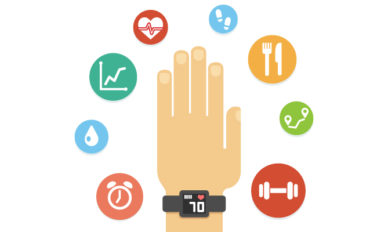
Wearable Wellness Technology Going beyond counting steps to impact your employee wellness program

Wearable wellness technology can be as simple as a pedometer used to count steps, or as complex as technology currently being designed and tested by Google’s research unit, Google X, that aims to detect and destroy blood cancer cells. There are wristbands that look like jewelry, watches that track sleep patterns, clothing that monitors heart rate and even smart contact lenses that will someday automatically test blood sugar levels of a patient with diabetes. Whatever the device, one thing is for sure, wearable wellness technology isn’t a fad.  It is a growing billion-dollar industry with an exciting future.

The wearable wellness tech market was estimated to be worth $2 billion in 2011. It is predicted to reach $6 billion by the end of 2016. IMS Research recently reported the rise in wearables from 14 million devices shipped in 2011 to an estimate of 171 million devices to be shipped by the end of 2016.   And while only 16% of the U.S. adult population used some sort of wearable technology in 2015, that number is predicted to increase to more than 33% by 2019.

What does this mean for employers?

Wearable wellness technology has great promise and opportunity for employer wellness programs. Wearables can be personalized to set and track individual goals and they can continuously measure important metrics such as blood pressure or calories burned. The ease of use and accessibility of data made possible by these wearables allow employers to inject fun and competition into once-dull wellness programs. Additionally, wearables foster community and social support as individuals are able to establish networks for accountability and encouragement.   For the employer, the technology offers a measurement paradise complete with data aggregation to monitor progress, quantify program outcomes and offer all types of incentives.
 
Continue reading